B2B Marketing · August 11, 2026
Usage-Based Pricing vs Seat-Based Pricing: What B2B Buyers Actually Prefer
Explore the shift from traditional seat-based to usage-based pricing in B2B SaaS. Learn what buyers truly prefer and how to optimise your pricing model.
By Digital Squad
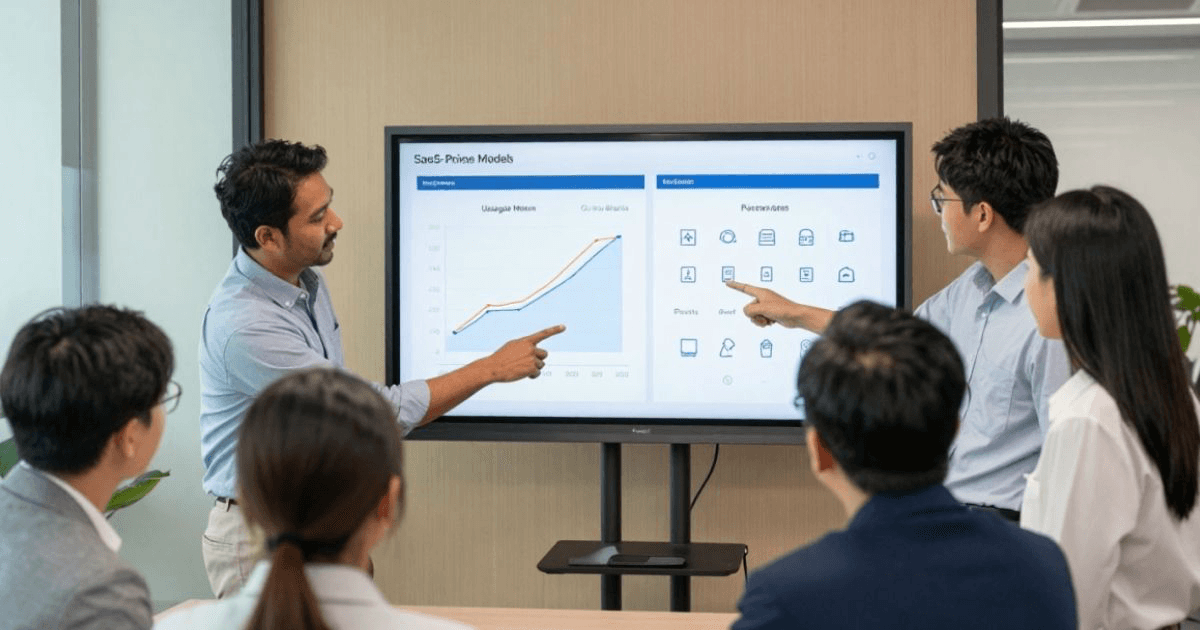
In the highly competitive landscape of B2B software and digital services, your monetisation strategy dictates your customer acquisition costs, retention rates, and overall valuation. For over two decades, the subscription economy relied almost entirely on per-user licensing. However, market dynamics are shifting rapidly. Procurement officers and executive stakeholders are auditing their software stacks with unprecedented scrutiny, leading software vendors and service providers to re-evaluate their monetisation architecture.
The core debate facing product leaders and growth executives today centers on usage-based pricing vs seat-based pricing. To build a resilient go-to-market motion, B2B organisations must understand how each model influences buyer psychology, internal product adoption, and long-term customer lifetime value.
Deconstructing Seat-Based Pricing
Seat-based pricing, commonly referred to as per-user pricing, charges clients a fixed recurring fee for every individual granted access to the software. It has long been the default commercial structure for enterprise platforms, project management tools, and collaborative software environments.
The Advantages of Per-User Licensing
- Predictable Revenue Streams: Vendors enjoy consistent monthly recurring revenue (MRR) or annual recurring revenue (ARR), simplifying financial modeling and cash flow forecasting.
- Budgeting Clarity for Buyers: Procurement teams can easily calculate annual software expenditure based on headcounts and headcount projections.
- Straightforward Value Proposition: The relationship between cost and scale is intuitive for non-technical buyers to grasp.
The Strategic Pitfalls
Despite its historic dominance, seat-based pricing creates friction in modern corporate environments. The primary issue is password sharing and license hoarding, where teams actively limit the number of paid seats to control costs. This artificial constraint restricts viral adoption across departments, leaving software underutilised and increasing the risk of contract termination during renewal cycles.
Understanding Usage-Based Pricing
Usage-based pricing (UBP), or consumption-based pricing, aligns billing directly with the volume of value a customer consumes. Metrics vary depending on the underlying technology, ranging from API calls, data storage gigabytes, and processed transactions to active monthly events.
The Advantages of Consumption Models
- Lower Barrier to Entry: Small teams and startups can onboard without significant upfront financial commitments, accelerating the sales cycle.
- Alignment with Value Realisation: Customers only pay for what they use, fostering deep operational trust and removing friction around team-wide expansion.
- Uncapped Expansion Potential: As a client's business grows, their usage naturally increases, driving expansion revenue without requiring a high-touch upsell process.
The Strategic Pitfalls
For buyers, consumption models can cause billing anxiety if usage fluctuates unpredictably. For vendors, financial forecasting becomes vastly more complex, as revenue becomes subject to macroeconomic slowdowns or sudden operational shifts within client organisations.
Comparing Monetisation Models
| Dimension | Seat-Based Pricing | Usage-Based Pricing |
|---|---|---|
| Revenue Predictability | High stability, fixed recurring billing | Variable, tied to operational activity |
| Initial Friction | Moderate to high upfront commitment required | Very low, low-cost entry point |
| Internal Adoption Velocity | Restricted by procurement licensing caps | Unrestricted, open to organisation-wide access |
| Customer Churn Risk | High if unassigned seats become shelfware | Low when usage is high; risk occurs during low usage |
What Do B2B Buyers Actually Prefer?
Industry research indicates a decisive preference for consumption flexibility. According to a detailed report by Thales CPL on consumption-based pricing models, buyers are increasingly demanding licensing models that offer transparent, cost-efficient alignment between price and actual operational utilisation. Modern buyers reject paying full price for dormant software licenses.
However, enterprise procurement departments simultaneously require fiscal predictability. Because of these competing demands, the market is coalescing around a hybrid framework. Leading organisations establish a base platform tier that covers core access and security compliance, combined with consumption-based thresholds for volume-driven usage. This hybrid motion delivers the predictability enterprise CFOs require while preserving the flexibility that modern buyers expect.
Aligning Your Go-To-Market and Growth Strategy
Transitioning or refining your pricing strategy requires careful alignment across your entire sales and marketing engine. Communicating value effectively on your pricing page, optimising onboarding funnels, and positioning your tiers demands deep expertise in digital customer acquisition.
At Digital Squad, we empower technology businesses and enterprise brands to build scalable demand generation engines. Whether you require a comprehensive B2B marketing strategy or specialised conversion rate optimisation services to maximise pricing page efficiency, our team delivers data-led growth frameworks designed for modern market realities.